Success story
Operational Control Center – Barcelona Water Transport Network
- Remote control of the entire drinking water transport and distribution network of Aguas de Barcelona.
- Maximize technical and economic efficiency in energy consumption.
- Efficiently manage alarms with the aim of optimizing the quality of supply.
- Minimizing intervention time in the event of incidents.
- Storage of historical information of the different system parameters for the analysis of maneuvers, actions and specific episodes. Facilitate planning.
- Architecture based on virtual servers.
- Need for redundancy and load balancing in object servers and communications.
- Integration in the same control center of PLCs and remote stations of different types and with different communication protocols.
- Distributed system and robustness of the control system.
- Standardization of objects at PLC, SCADA and Information System level.
- Continuous management and automatic regulation of hydraulic installations that allow coverage of the population's water demand.
- Flexibility in the preparation of synoptics with a high level of personalization.
- Operational visualization through synoptic screens, alarms and events, historical data and graphics.
- Geographic visualization through the Google Earth platform, including active management, visualization by layers and summary of information in time and alarms.
- Web publication of real-time and historical data reports.
- System Platform
- InTouch
- Historian
Aguas de Barcelona is a company with more than 140 years that throughout its history has contributed greatly to the growth and development of Barcelona and its metropolitan areas. It provides service through its 4,554 km drinking water network to the city of Barcelona and 23 other municipalities in its metropolitan area, covering a total area of 462 km2.
In addition to the supply of drinking water, Aguas de Barcelona offers a sewerage service through the integral management of urban drainage, management of alternative resources to make more responsible and sustainable use of water, and water analysis services and management of control plans in infrastructures related to the integral water cycle.


The Aguas de Barcelona Operational Control Center permanently and uninterruptedly supervises the key parameters of the water supply service to Barcelona and its metropolitan area to offer a continuous service with the necessary pressure. The distribution of drinking water in the metropolitan area is managed from the Operational Control Center, and it is also ensured that the supply facilities operate with criteria of maximum technical and economic efficiency, maintaining stable service quality levels at all times.
The operation of the control center integrates the supervision of the adequate volume of water resources, the stabilization of the pressures of the supply service and the control of sanitary guarantee of the supplied flows, becoming the nerve center of the supply of drinking water to 3 million people.
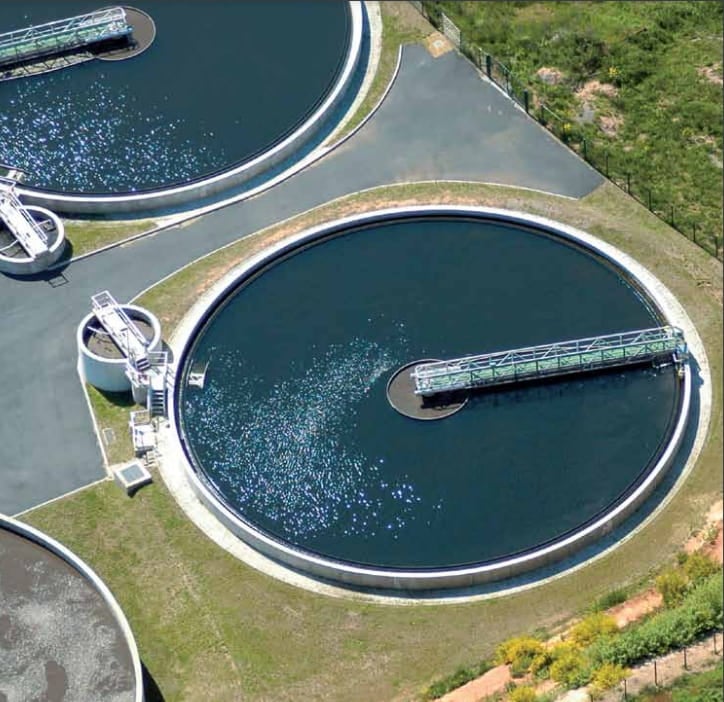
This project integrates the remote control of 106 remote stations distributed throughout the metropolitan area that are responsible for managing more than 900 actuators distributed throughout the territory. Among the main elements regulated by this system are 91 head tanks, 73 regulating valves, 92 pumping stations and 54 chlorination and quality control points.
The extension and complexity of the Aguas de Barcelona transport network requires a Supervision and Remote Control system that facilitates the management of all the elements involved and that allows the reception of any operational or functional anomaly, as well as the registration of historical values that allow subsequent analysis, with the aim of improving efficiency and facilitating the planning of the network according to the needs of operation.
The System Platform architecture of Wonderware adapts optimally to the control needs in terms of the possibility of working in a fully modular object-oriented environment, with flexible and highly customizable synoptic screens.