


sectors
Power Generation
Next destination: a sustainable transformation
Join the green revolution with challenges that break the traditional production schemes.
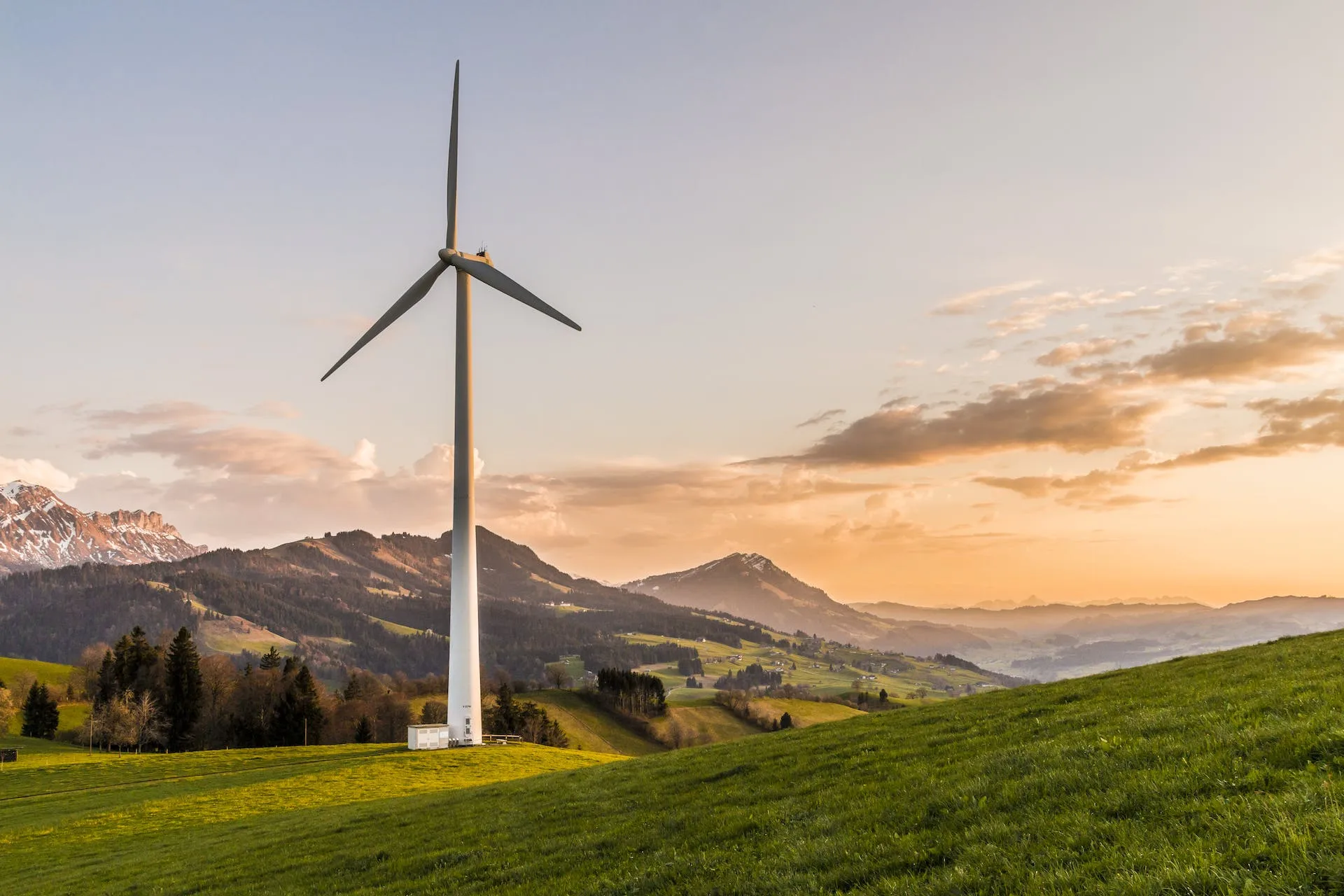
Towards a quality energy transition
Energy resources are the engine that makes the world work as we know it today: factories without interruption, air-conditioned homes, mobiles browsing at all hours, and so on.
Its correct conservation ensures an optimal quality of life for citizens, by allowing access to basic services such as health and education. Likewise, it promotes production, trade and innovation in consumer countries. But, like everything else, it is either used as it should be or it is wasted.
The Earth is crying out for help more and more loudly, with global warming that, if not stopped in the imminent years, will cause irreparable damage that, in fact, we are already beginning to see in some regions.
Both energy generators and those who depend on it for production are embarking on one of the greatest challenges in history.
Accustomed to working with traditional fuels and very long processes, companies must take a leap into the future and bet on cutting-edge technologies that optimize their operations. In addition, renewable resources need to gain an increasingly significant ground that over time leads to a total decarbonization of the system.
Opportunities that taste like the future
Renewable energies: goodbye to carbon
At the end of the 20th century, society, already industrialized, began to become aware of the negative global impact caused by traditional resources. Beyond having an expiration date, they endangered the preservation of the planet.
To problems, solutions: there is hope and it is called renewable energies. Derived from natural sources, they produce far fewer emissions than fossil fuels.
At the time, the only drawback was the high cost of changing the usual production systems for clean energy. Fortunately, they are becoming cheaper and more accessible, which encourages companies to jump into the pool. In fact, global investment in this type of energy already exceeds the economic bet on the fuels of a lifetime.

Carbon is beginning to be a thing of the past, yes, with a gradual elimination to ensure the stability of the companies that benefit. In its place, renewable sources such as solar, wind, hydroelectric, geothermal, biomass or tidal are adopted which, together, help to reduce greenhouse gas emissions, as well as the amount of toxic waste that is difficult to decompose.
Welcome, green hydrogen
Decarbonization is not an easy task in certain sectors; there are cases that seem almost unimaginable. And this almost is due to the appearance of green hydrogen, a solution that could represent a paradigm shift.
A little context. What is green hydrogen and why?
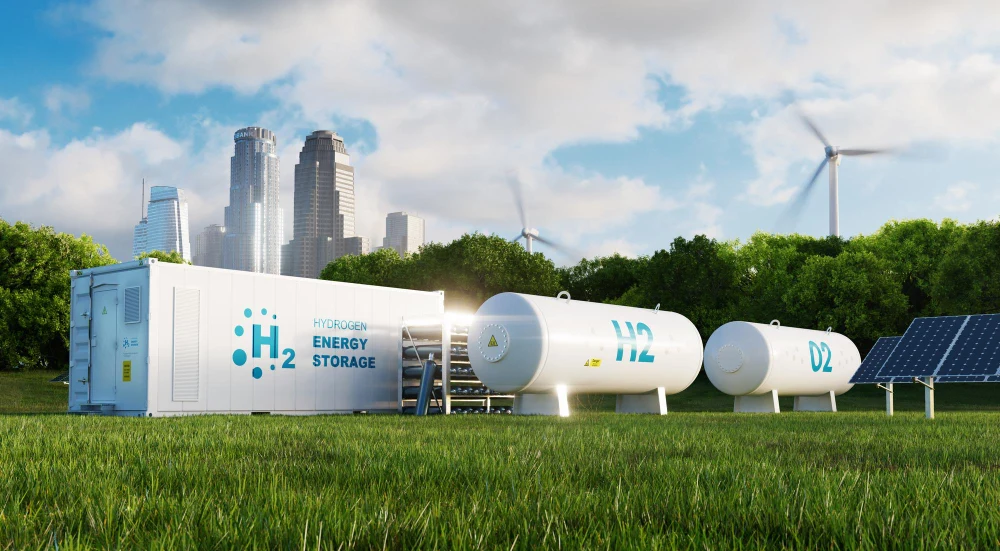
- Clean fuel that is obtained through water electrolysis (H2/O separation with electric current).
- Unlike gray hydrogen, the only residue left by the process is water: no trace of CO₂.
- The promising alternative: capable of storing and using energy from natural sources.
- Applicable to multiple fields: industry, electricity production, battery development, and more.
According to the IEA, this method would save 830 million tons of carbon dioxide per year that are generated when processing hydrogen with fossil fuels.
Although it sounds attractive at first, we must not lower our guard. If this resource is adopted in organizations, it is necessary to ensure the mitigation of risks for workers, with adequate preventive and predictive safety measures. EAM (Enterprise Asset Management) systems incorporate HSE modules prepared for this.
Innovate as the only option
The EU requires achieving climate neutrality by 2050 and reducing net greenhouse gas emissions by at least 55% by 2030. To the question of how to achieve this, the answer is unanimous: the path must be electrification based on renewable energy sources.
Among the most advanced technological proposals put on the table are high-performance batteries. These allow a reliable and efficient supply for multiple applications, such as vehicle electrification, renewable energy storage, energy backup in the event of possible failures and continuous power supply to critical electronic devices.
The increase in efficiency in plants and infrastructures, therefore, is achieved thanks to the fusion of green energies with new technologies such as IoT sensors, data analytics, intelligence or artificial vision, etc., as well as greater connectivity between devices and systems.

Energy decentralization
One of the great barriers to the energy transition has always been the high economic cost of replacing equipment and systems. However, as we saw at the beginning, this barrier has been losing weight over the years.
Measures such as decentralization allow the generation and control of energy to be distributed in a more equitable and localized way. Thus, technologies such as solar and wind become more accessible and cheaper for companies, which can obtain their own energy without the need for large transmission infrastructures.
From traditional consumers who depended on third parties, these companies evolve into prosumers, with greater involvement in energy production and storage.
Smart Grids without Emissions, a Good Prologue
Smart Grids (smart electrical grids) are a good method of controlling from where the generation, distribution, consumption and storage of electrical energy is required. Thanks to the integration of all the components of a specific network, they convert the supply into efficient, sustainable, economical and safe. At the same time, users can manage each of their dispersed resources in a single control center.

Let's protect our resources
As has been seen previously, advanced technologies not only consolidate a plan B in the face of possible failures, but also guarantee that the most critical and essential devices do not stop working under any circumstances.
Although the decentralization of our energy sources exposes us to a greater risk of cyberattacks, it ensures that if one fails, the rest will not fall in cascade. Hospitals, airports, drinking water supply and production plants are examples of operations that need to be active at all times and have alternatives in the event of system errors.

If a natural disaster also occurs, the world cannot remain incommunicado: there must be strategically located power plants, away from areas prone to catastrophes, that can provide an immediate response to citizens.
In short, the transition to decentralized digital connections poses significant challenges in terms of cybersecurity. Open solutions need a good base that protects the system from any attempted assault and ensures the stability and reliability of the energy supply.
Get in Touch with an Expert
Fill in your information and we’ll contact you to handle your request.
"*" indicates required fields