The Industry is Beginning to Structure its Own Cybersecurity Strategy.
We highlight the document “Recommended Practice: Improving Industrial Control Systems Cybersecurity with Defense-In-Depth Strategies” developed by the ICS-CERT of the DHS of the US government.


The deployment of security programs in IT environments is a common practice carried out in most organizations. The same is not true for industrial or OT (Operation Technology) environments, where the lack of standards and regulations makes the introduction and development of specific security programs much more costly.
In any case, it is true that there is currently abundant and varied documentation on how to deploy this type of program. Among them, we highlight the document “Recommended Practice: Improving Industrial Control Systems Cybersecurity with Defense-In-Depth Strategies” developed by the ICS-CERT (Industrial Control Systems Cyber Emergency Response Team) of the DHS (Department of Homeland Security) of the US government.
This document proposes that the deployment of a defense-in-depth strategy in industrial environments should consider the following six perspectives:
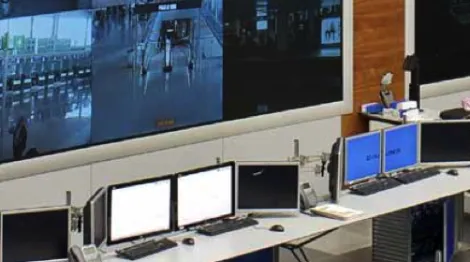
- Physical security: implement surveillance mechanisms in the factory, CCTV, secure access to data processing centers.
- Perimeter security: deploy devices that allow segmenting, protecting and/or filtering the information handled on the networks.
- The development of policies and procedures: that help improve the effectiveness of the installed countermeasures or help to perform change management and backup automatically.
- Training and awareness actions in the field of industrial cybersecurity.
- Network event monitoring: so that you can respond in real time to possible unexpected events, analyze the logs generated, or perform forensic analysis.
- The acquisition of devices and technologies that incorporate security elements or that help create secure environments such as:
- Field devices (RTU or PLC) that are accessible through secure protocols such as SSL, HTTPS, that use the IEEE802-1X standard for secure authentication at wireless access points or that include an integrated firewall.
- Industrial protocols created with security layers, such as OPC UA or DNP3 SECURE.
- SCADA or HMI systems that have been developed with secure programming methodologies, that allow them to be deployed with different levels of redundancy (communication, application, historical data, visualization) or can be virtualized to take advantage of the advantages provided by this technology.
Fernando Sevillano
Business Development Consultant at Logitek
In collaboration with: Cristina Jiménez
(Marketing Department at Logitek)