Unified Control Center for Smart Cities.
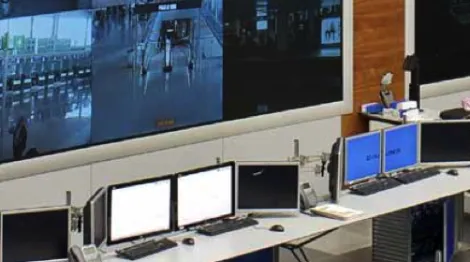
The unification of operations management in a unified control center will optimize the management resources of a city and make it more efficient in daily operations.


We would like to conclude this series of UOC (Unified Operations Center) posts for infrastructures with a mention of smart cities and urban planning management.
When we talk about smart cities, we are referring to cities that encompass both large and medium-sized ones. Not only Barcelona, Seville, or Bilbao can address SMART initiatives, but medium-sized cities such as Sant Cugat, Pontevedra, Pozuelo, Guetxo, or Fuengirola can advance in the same way in a process of integrating operations related to urban planning management and public spaces.
As mentioned in this series of posts about UOC (if you have not read them, I recommend them!), the union of operations management in a unified control center will optimize management resources and be more efficient in daily operations.
It is not necessary to make a large investment to have a unified control center, but you can start with the integration of the operations of some of the systems and have a small control room that, in the future, thanks to the scalability of the Wonderware UOC platform, can be expanded in size, signals, screens, and client equipment.

I What are the systems that can be most easily used to set up the Unified Control Center and that medium-sized cities such as Rubí have already started to implement?
- Automatic lighting control system
- Distributed well and pump management system
- Irrigation system in green areas
- Asset management system for maintenance and patrols
Having these integrated systems will allow the different operators (obviously, each one with their access permissions) to operate from the same platform, both remotely and in the control center. This will allow them to operate the systems and visualize the global status of the distributed assets, as well as to cross-reference data very easily in order to carry out a common operation, such as energy consumption.

The urban planning and public space engineer faces a series of needs on a daily basis, such as:
- Energy saving (integral management of buildings and public lighting)
- Water saving (irrigation of parks…)
- Environmental improvement (air quality, noise…)
- Improvement and management of electric mobility
- Improvement in operations management
- Improvement in contracting flexibility with standard and open platform
- Share public information with citizens
- Share Open Data information with app developers
These are needs that are implicit in the digitalization of cities and the adoption of new technologies. That is why choosing an open and standard platform, without making us captive to a single company to set up the control center, is one of the most important decisions in this process. A platform that allows adapting to the future and current needs with solutions of:
- Centralized monitoring and open data
- Local control
- Integration into centralized platform (UOC)
- Verticals and standards for different needs
- Scalable growth (being able to start with something small and grow)
- Integration with wireless network deployments and IoT/cloud technologies
We would like to end with a video of the UOC of the city of Barcelona developed with Wonderware technology, in which the integration of the irrigation of parks and gardens began and was expanded with new functionalities such as public fountains, escalators, elevators of the city…
And finally, if you are interested in seeing a demo of a unified control center for infrastructures, you can watch the webinar again that has already been held and is available here:
https://promos.wonderware.es/demo-en-un-centro-de-control-unificado-de-infraestructuras-aguas-ferroviario-y-tuneles/webinar-video-demo-en-un-centro-de-control-unificado-de-infraestructuras-aguas-ferroviario-y-tuneles/