



How much does each production stoppage cost?
A 2021 study of the 72 leading industrial multinationals worldwide revealed that, on average, large plants suffer 323 hours of downtime per year. The average cost of losses, penalties, human resources, and production restart is €532,000 per hour (according to the Senseye 2022 report “The True Cost of Downtime”).
A disaster for the plant alone? Not really. All these economic losses, derived from downtime, tend to reduce consumer confidence and/or damage the company’s image, two facts that further endanger the economy of companies.
How is Digital Transformation Changing the Role of the Plant Manager?
In all industrial activities, automation equipment (PLCs) are the common denominator. This equipment acts directly with the physical reality of the process: the correct functioning of each operation depends entirely on them.
In addition to a myriad of advantages, the digitization of plants generates, at the same time, new challenges: as the program that the PLCs execute is crucial for the process, its correct functioning in these cases also directly affects the quality of the service performed. Therefore, it is essential to have a tool that allows, based on backups and control of changes in these programs, to increase the overall availability of the systems.
Automating your production environment only helps you win half the battle if data control and management are still carried out through manual processes.
Have you ever wondered how you can…
- Avoid interruptions in complex environments?
- Automate, monitor, and protect production systems?
- Prevent or quickly eliminate data loss, downtime, and incorrect configurations?
- Accelerate problem solving?
Control What Happens in your Equipment
Effectively avoid production downtime through intelligent monitoring
Analyze data and programs from numerous manufacturers and automate the processes involved in creating and storing versions, documentation, backups, and many other processes that can lead to errors when managed manually.

Octoplant, the solution for change control and version management in your plant equipment:
- Control and track all changes that occur in the OT environment.
- Traceability. Know Who, What, When, and Why a modification has been carried out.
- Reduce repair times by having process logics available and recoverable instantly.
- Standardize the program modification procedure.
- Comply with regulations and quality control.
- Provide better access control to OT equipment.
- Detect changes and identify/visualize the change itself.
- Multi-manufacturer compatibility.
Protect your most critical communications
Guarantee production time and network security
The evolution of the industry has opened up a greater use of devices and, consequently, has also increased the demand to control data communication. Today, the most critical communications are carried out with fieldbuses, where Profibus is still the most used but Profinet is growing in new installations.
However, these fieldbuses are significantly more difficult to supervise, monitor, and diagnose than a TCP/IP communication. Therefore, in the event of any failure, tools prepared to find where a problem has occurred or may occur are required.
How to reduce or eliminate production stoppages?
- Continuous monitoring: anticipate any unforeseen event and solve it before it causes a production stoppage.
- Network segmentation: design a robust architecture, limit incidents, and prevent them from affecting your entire network.
- Training your team: empower your team to be able to maintain and solve problems effectively and guarantee the long-term success of your plant’s industrial networks.
The operation of industrial networks is a critical factor for any production plant. Regardless of the type of network or its architecture, Becolve Digital provides the necessary tools to connect and help standardize preventive measures against the costs of production downtime:
1. Continuous monitoring
Solutions designed for Profibus and industrial Ethernet networks. Their real-time detection and mitigation capabilities allow minimizing or even eliminating downtime, thus guaranteeing uninterrupted production.
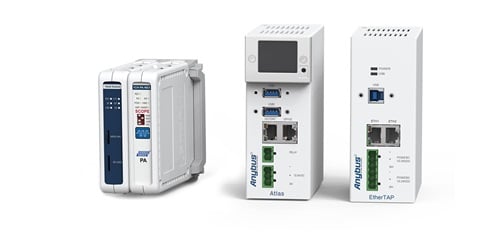
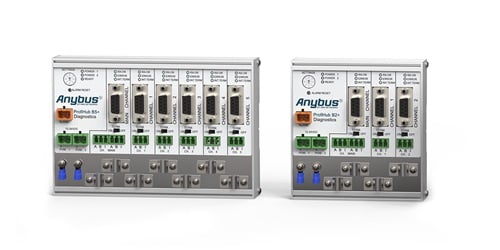
2. Network segmentation
The key to having a healthy network is in the infrastructure. Segmentation allows creating different types of topology that can increase reliability and extend the life of your plant. Thanks to the isolation and containment of problems, it prevents them from affecting the entire system.
3. Training your team
Prepare your staff with the necessary skills to optimize network performance and increase uptime, thanks to Becolve Digital, the only official Profibus and Profinet Compentence Center (PICC) in Spain with a wide range of training and certification courses on Profibus and Profinet networks.
Get in Touch with an Expert
Fill in your information and we’ll contact you to handle your request.