


Solutions
Communication Gateways
Enhance communications in industry and infrastructure
Gateways: Enhance communications in industry and infrastructure

With the rise of technological communications, there is an increasing diversity of protocols that favor their own systems, with specific languages created according to the scope and organization. While someone might consider their existence the solution to the particular needs of each company, the reality is that, if they do not understand other languages present, they can pose a problem.
The wealth of incompatible protocols, whether designed for specific uses, such as the industrial sector, Smart Building, or Smart Grid, or adapted according to the scope, such as MQTT, generates a segmentation between the different devices and limits interoperability. As if that were not enough, the increasing search for intelligent and efficient systems further complicates things, as these have to be connected to function properly. Herein lies the importance of gateways.
Gateways, protagonists of M2M communication
Communication gateways, commonly known as Gateways, are meeting points for the different devices or networks of a plant or infrastructure. Their main task is to facilitate the exchange of data between the systems they connect, regardless of the communication protocol of each one.
Unlike what one might think, they stand out for their ability to generate more than 300 different combinations. Their leading role in linking multiple languages for subsequent decision-making helps organizations optimize and improve the efficiency and quality of life of their resources.
Differential advantages of these solutions
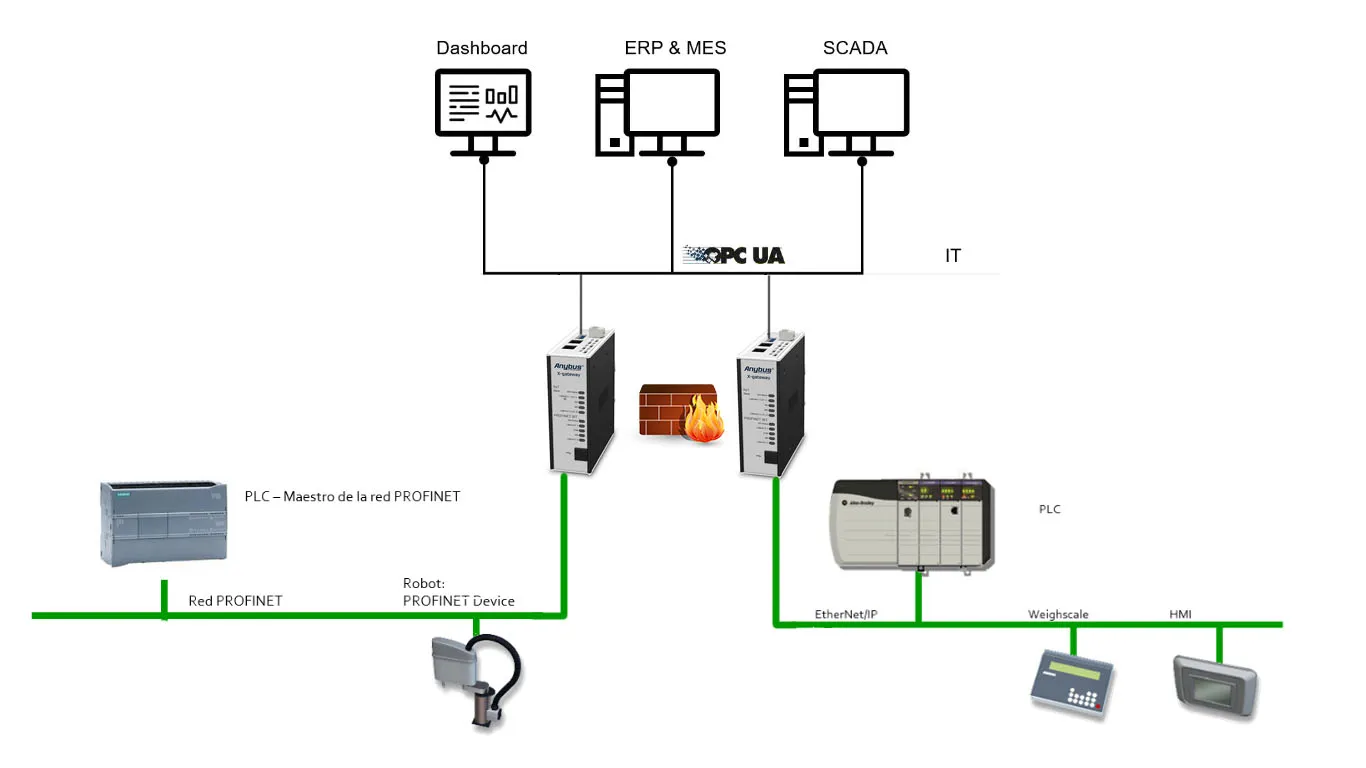
Although they share functions with other communication options, such as PC cards or PLCs, they stand out for adding a high degree of independence from the hardware. It is irrelevant who the device manufacturer is: as long as it complies with the standards, it can be integrated into another network through a gateway. In the case of a factory, for example, they can integrate a robot with another completely opposite protocol.
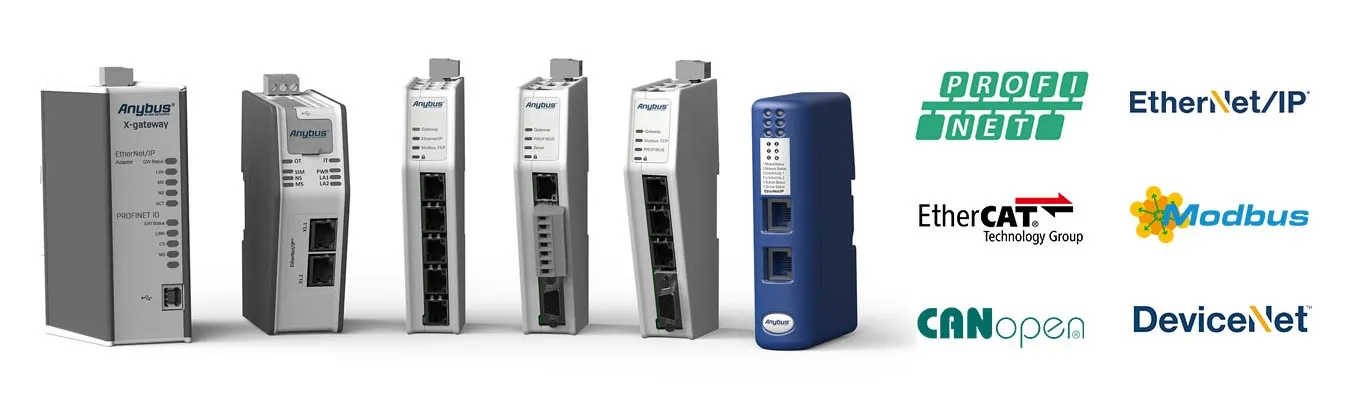
And speaking of integration: in addition to providing autonomy to the equipment like no other, they favor easy integration, since they require minimal configuration in control devices such as PLCs or BMSs. Similarly, these gateways are certified by various organizations, so they ensure compatibility with the networks in which they are integrated.
Security is not a problem with gateways either. Based on an isolation of the networks they communicate, both hardware and software, these systems guarantee that only the specific information for each situation is transferred and between connected elements. This does not mean, by any means, that the process slows down: there are protocols that allow a data transfer speed of 10 ms, and even 2 ms.
How gateways work: step by step
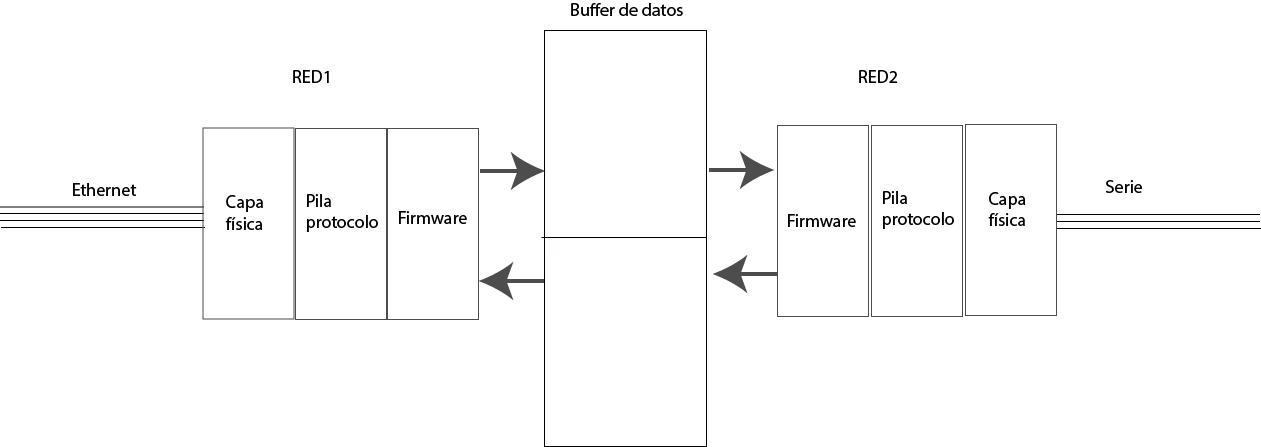
Gateways do not have much mystery in terms of their behavior. They are composed of at least two interfaces formed, in turn, by a physical layer such as Ethernet, Serial (RS232/422/485) or CAN Bus, and a protocol stack such as PROFINET, Ethernet/IP, BACNET or KNX, among others. Both interfaces share two buffers for the transfer of information from one network to another. Let’s see it in the following image:
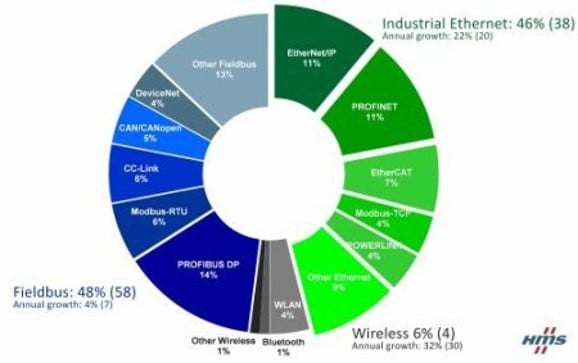
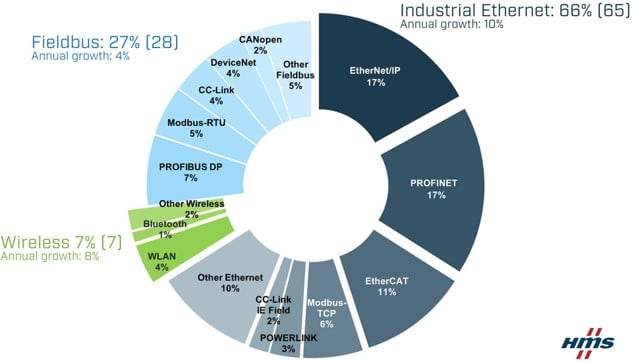
Today, most protocols have taken a step forward and changed their serial or proprietary physical layer to an Ethernet: PROFIBUS to PROFINET, Modbus RTU to Modbus TCP, BACnet MS/TP to BACnet IP, or ControlNet to Ethernet/IP. As can be seen in the graphs below, the use of industrial Ethernet reached 66% in 2022, above 46% in 2017.
Areas where to get the most out of them
Industry
If we pursue automation in our plants, integrating gateways can be a good way to start. Used to connect and manage devices and sensors in these environments, they enable data collection, monitoring of the status of machinery, and data-driven decision-making in real time.

And what about industrial IoT? In this case, the gateways act as
links between IoT devices and sensors, both in the industrial environment and in the cloud. They drive predictive maintenance, production optimization, and operational efficiency, thanks to their ability to compile, process, and transmit images securely.
Smart Cities and Building Automation
Outside the field, gateways are also a good tool for traffic management. Beyond collecting information from sensors at the moment, they are able to communicate with traffic signals, which often have a serial interface that needs a gateway to coordinate with the control system.

Smart cities, on the other hand, use gateways to obtain data from sensors in garbage containers and optimize waste collection routes. The greater the optimization, the lower the costs and the greater the efficiency, which makes gateways a good ally for the ecological transition.

Another area of action for gateways is the intelligent management of buildings. The union of building control protocols, such as BACnet, with lighting systems, such as DMX or DALI, air conditioning or alarm sending, allows you to manage everything that happens or is about to happen from a BMS
Thus, gateways give rise to the automation of operations such as adjusting the power of lighting based on existing ambient light, the temperature of heating according to the climate, or sending emergency signals in case of catastrophes. All from a state-of-the-art software that avoids unnecessary energy waste.
Smart Grids (Intelligent Electrical Networks)
Again, we return to talking about monitoring and control with gateways. With regard to Smart Grids, the collection of data from smart meters, network sensors, and distributed energy generation devices helps companies refine network supervision.

Leaving aside surveillance, gateways allow for bidirectional communication between the components of the smart grid that ensures a reliable electricity supply. They are also compatible with the VHP READY industrial standard, based on IEC61850 and IEC60870-5-104 protocols, which balances the volatility of renewable energy in electrical networks.
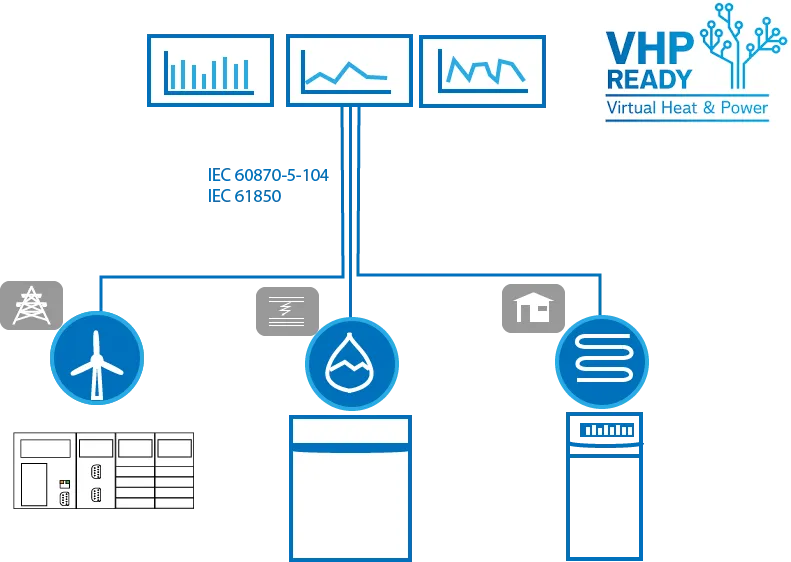
There is no doubt that gateways sound like the future in many sectors. If we focus on Smart Grids, as mentioned, we see the growing importance of these gateways in Virtual Power Plants. Their integrating power drives a centralized management of systems and energy chains distributed throughout the world.

Related products

Contact an Expert
Fill in your information and we’ll contact you.
"*" indicates required fields