What is a Smart Building and What should We Consider in these Projects?
Discover what a smart building is, its benefits in management, energy efficiency, and user experience, and the key challenges for its implementation.


The digital evolution has also landed in the world of construction and building management. More and more buildings are being digitized to become more efficient, sustainable, and comfortable for their users. And it is precisely in this context that the concept of Smart Building arises. But what exactly is its meaning?
Smart Building: Understanding the Concept
A Smart Building is a construction equipped with advanced technology, from IoT (Internet of Things) sensors to automated control systems, which allows for a comprehensive management of various parameters of the installation.
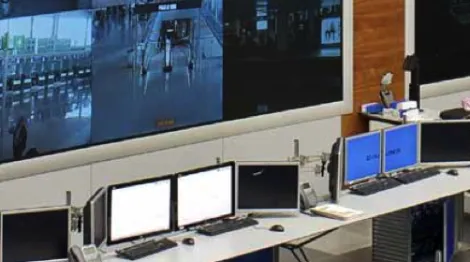
One of the fundamental components of these smart buildings is the BMS (Building Management System). This system acts as the centralized “brain” of the building, through which aspects such as air conditioning, lighting, and the energy consumption of the building are monitored and controlled.
In addition, it is possible to collect data and parameterize key indicators related to the operation of the building, such as environmental conditions or the number of users. This allows progress towards multiple objectives: optimizing energy efficiency, improving sustainability, and offering a better experience to occupants, all through automation and data analysis.

For building managers, this approach represents a great improvement in the way properties are managed, relying on IoT devices for data collection and BMS systems that can make informed and automated decisions. In fact, the idea of the smart building has ceased to be a futuristic concept to become an increasingly present reality in offices, hospitals, hotels, shopping centers, and other modern corporate buildings.
What are the Benefits of these Smart Buildings?
Undoubtedly, the advantages of a Smart Building are practically endless. By having the ability to measure a wide variety of parameters, it is possible to draw conclusions and program actions for almost any activity. As an example, we will talk about the most common ones:
First, we can achieve greater energy efficiency, controlling and reducing electricity, heating, air conditioning, and water consumption thanks to IoT meters and thermostats that regulate air conditioning and lighting only when necessary. For example, systems can dim or turn off lighting and air conditioning in unoccupied areas using presence sensors, or adjust the light intensity according to the natural light available, avoiding unnecessary expenses. This not only reduces operating costs but also makes buildings more sustainable by reducing carbon emissions.

In addition, smart buildings also improve the user experience. Occupants enjoy greater comfort with environments at a pleasant temperature and better air quality. An employee can adjust the temperature of their workspace or reserve a meeting room through a mobile application. This type of action has an impact on user satisfaction and their productivity.
Finally, the daily management of the building becomes more agile and proactive. Thanks to automation and continuous monitoring, the facility manager can anticipate failures, optimize maintenance, and control the facilities in a centralized manner, improving efficiency in operations.

Challenges and Considerations when Implementing a Smart Building
While the benefits of converting a conventional building to a Smart Building are evident, this transition entails a series of important challenges to address in order to ensure its success:
- First, the integration of heterogeneous systems (existing equipment with new technologies) can be complex. A good practice is to opt for open standards that guarantee compatibility between devices to avoid information silos.
- The management of the generated data is another critical factor. A Smart Building is capable of reading numerous variables and therefore produces a large amount of information that must be analyzed (even with artificial intelligence) to turn it into useful decisions and take advantage of its full potential.
- On the other hand, ensuring the connectivity of all sensors and equipment distributed throughout the building is essential. This is where specialized IoT wireless technologies such as LoRaWAN come into play, which offer an efficient alternative to connect numerous sensors over long distances and with low consumption, facilitating deployment without the need for wiring. This is very useful for modernizing existing buildings without carrying out major invasive works.
- Fourth, a Smart Building project involves different departments. Therefore, it is essential that the building management teams (Facility Management) and the IT departments work in a coordinated manner, since the technology used involves both departments, from the collection of sensor data to the exploitation of the data.
- Finally, Smart Building projects must be oriented to current regulations, from energy efficiency standards to data protection laws, guaranteeing legal compliance and the privacy of users.

It is clear that Smart Buildings are already a reality in the optimization of space management. The key is the combination of sensors, technology, and data to achieve more efficient, sustainable, and user-centered operations. However, materializing a successful Smart Building project requires a strategic vision and taking into account some technical and organizational details.
Descubre cómo podemos ayudarte a convertir tus espacios de toda la vida en Smart Buildings más sostenibles, conectados y eficientes.