What is an RTU?
The RTU or Remote Terminal Unit is a device designed for the control and automation of unattended facilities. Here, we explain all its features and functionalities.


An RTU or Remote Terminal Unit is a device designed for the control and automation of facilities. Its function is to manage physical equipment and, in turn, communicate with the SCADA control system, and they are, by far, the most used equipment for the remote control of distributed and/or unattended facilities.
It may be thought that PLCs can also be used for this function, but the difference in use between them is notable. While PLCs are designed for industrial use, RTUs are more appropriate for the remote control of facilities because they incorporate a set of hardware and software functionalities that are more suitable for that environment, such as:
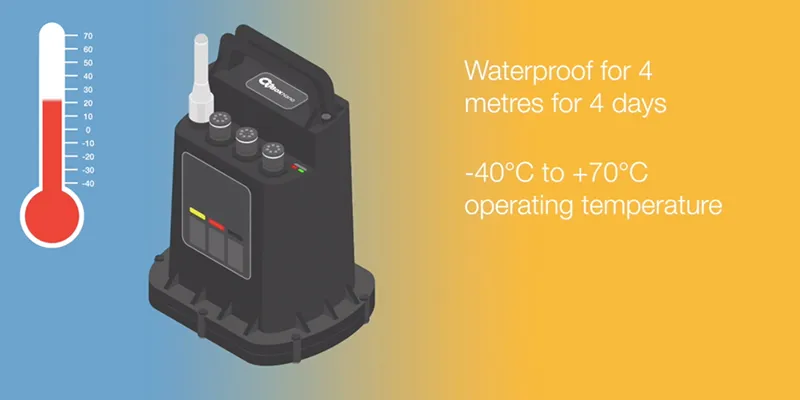
- Environmental tolerance: ruggedized hardware with an extended humidity and temperature range.
- Multiple connection methods: Ethernet, serial, GPRS/3G/4G, radio, …
- Different communication protocols upstream and downstream: Modbus, SNMP, IEC-104, DNP3, …
- More memory for Store&Fordware functions.
Therefore, RTUs have allowed for better and greater remote control of distributed facilities. It should be noted that the needs of remote control differ from the needs of industrial control. While in industry, control at the millisecond is prioritized, in infrastructure management, two major requirements must be met: autonomy and data reliability.
Autonomy is a logical requirement. If RTUs are mainly installed in distributed and/or unattended locations, it implies that there are no qualified operators nearby when a failure or breakdown occurs. Therefore, the equipment must be able to continue working regardless of the problem that occurs, adverse weather conditions, power failures, communication failures, tremors, blows, etc. An RTU must have the necessary hardware and functionalities so that an environmental problem does not mean a stoppage.
If the equipment can be incommunicado for hours, this should not lead to a loss of information. Therefore, an RTU must be able to store all relevant information during periods when it does not communicate and, very importantly, with its time stamp. In this way, the SCADA will be able to contextualize all the data at its specific time when the connection is made. In addition, for good data reliability, the RTU must be able to take the initiative in communications if the situation requires it, that is, not wait for the SCADA to ask (PULL communication), but send the message itself (PUSH communication) to ensure that this urgent matter is transmitted.
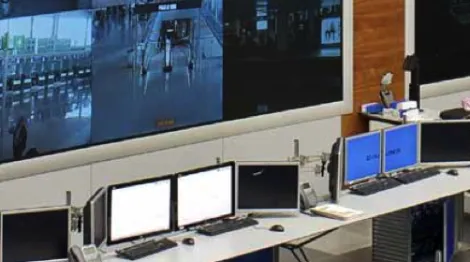
LKRemote is the leading range in infrastructure control, providing access, remote control, and security to multiple facilities distributed throughout the Spanish territory, from airports, electrical booths, pumping stations, CPDs, etc. LKRemote allows the user to guarantee the correct activity of their infrastructure with a simple programming of its operation and a quick integration with any SCADA platform.
In addition to perfectly meeting the requirements mentioned here, it is also capable of establishing VPN tunnels, communicating via MQTT or OPC UA, programming in structured text and LADDER, or programming an integrated web server, among many other functionalities.
Take a look at the different LKRemote models and you will see why they are used in hundreds of locations throughout the Spanish territory.