Barcelona, a Global Benchmark in Smart Cities: why?
In a context in which the IoT label has become widespread, the city of Barcelona is presented to the world as a pioneer in this field, and more than just an acronym, the “Internet of Things̶...


In a context in which the IoT label has become widespread, the city of Barcelona is presented to the world as a pioneer in this field, and more than just an acronym, the “Internet of Things” connects us with a tangible reality: The technology deployed represents a new approach to the management of urban public transport systems, parking, lighting or waste treatment, and most importantly; its application has a direct relationship with improving the quality of life of citizens.
During a few years in which a slow economic recovery seems to be taking place and in which solutions beyond the conventional were demanded, the Barcelona City Council marked out a roadmap that, under the name of Smart City Barcelona, was committed to the integration of different existing projects in the city and to identifying new opportunities both to improve the services of the city’s inhabitants and to improve the conditions and environment of companies.
This commitment materialized in a technological innovation platform for city services, which includes up to 12 areas of intervention, including transport, water, energy, waste, and governance, from which 22 programs have been initiated, covering 83 projects of various kinds.
At the technological level, it started from a solid base, since Barcelona already had a network of 500 kilometers of fiber optics throughout its metropolitan area. This extensive network currently provides 90 percent coverage and acts as the backbone of the city’s integrated systems. In addition, it is a great advantage for both residents and visitors: Since 2013, the number of WiFi access points has grown from 62 to 670 points with a maximum distance of only 100 meters from one point to another. Logically, during this period the number of wifi users has doubled.

From here, what are the areas and achievements that have made Barcelona a global reference in the field of smart cities?
Energy efficiency
To improve energy efficiency, 19,500 smart meters have been installed to monitor and optimize energy consumption in specific areas of the city.
Waste management
In waste management, the collection of garbage containers has been monitored, optimizing routes thanks to the measurement of waste levels. In addition, the detection of hazardous waste has been developed through sensorization.
Transportation
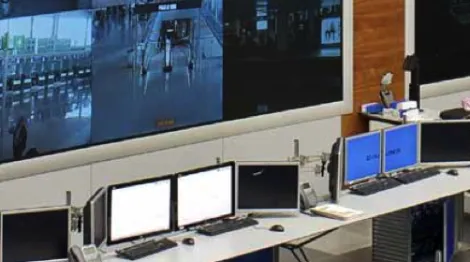
In transport, Barcelona has followed a multimodal strategy, promoting on the one hand the use of electric cars and public bicycles, while increasing investment to improve bus and parking systems. The new bus stops provide users with an interactive experience, with tracking of bus locations, USB charging points and free WiFi. Metropolitan infrastructures such as the Barcelona Airport or Ferrocarrils de la Generalitat have implemented technologies for the centralization and real-time management of information, improving their efficiency.
Traffic
For drivers, Barcelona has launched a sensor system that informs and guides them to available parking spaces. The sensors, installed in the asphalt itself, detect if a vehicle is parked in a specific place. This program has been a direct cause of the reduction of emissions and traffic congestion. The application, called ApparkB, also allows drivers to pay online. With one year of operation, the application received 4,000 parking requests per day.
Lighting
The city already started in 2012 a great plan to improve lighting, using intelligent technologies to improve the efficiency and utility of the city’s streetlights. In 2014, more than 1,100 streetlights had already made the transition to LED, which represents a significant reduction in energy consumption. The streetlights detect the proximity of pedestrians to activate or not in such a way that when the streets are empty, the lights turn off automatically. In addition, they are equipped with sensors that provide very valuable information.

Parks
In order to maximize the efficiency of the city’s parks, Barcelona has launched a technological platform to remotely control irrigation in parks and water levels in public fountains. The use of sensors that monitor humidity and rain allow workers to determine the amount of irrigation needed in each area. The program, which has been implemented in 68% of public parks, has helped to reduce water expenditure by 25%, which has meant a saving of $555,000 per year.
All these systems constitute a “network of networks” that can be used and shared by all the city’s management bodies. This network of integrated sensors has been possible thanks to Smart platforms such as Sentilo, a platform developed specifically for the city of Barcelona, open source and available for reuse regardless of changes in government management. Through this platform, data is managed and shared between the different institutions and with citizens. In order to facilitate citizen access, 44 information points have been set up where residents can find information, access services and make requests directly to the City Council.
This system has involved a large investment in collaboration with the private sector and this has translated into great economic benefits as well as a reduction in emissions, an improvement in habitability, and savings in water and energy costs… In short, the city has made a commitment to the quality of life of residents, workers and visitors, which has positioned it as a global benchmark in everything related to smart cities.