The Hidden Factory: how to Know where You Have OEE Losses
Do you know where the losses are in your factory's production process? Don't you know your hidden factory? Get in touch with us and we will help you discover your hidden factory.


The factory is not an ideal environment, although many would like it to be; not all machines are producing 100% of the time, nor are all products produced well the first time. All this added to the delays in delivery times, dynamic markets and the uncertainty in the distribution channel; which affects the entire manufacturing chain.
Could you say where these losses are and how they affect your factory? If the answer to this question is no, it is because there is a part of your factory that you do not know, the so-called “hidden factory”.
The Hidden Factory
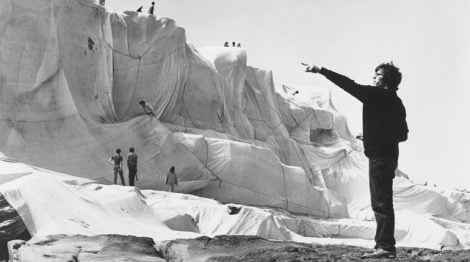
The hidden factory concept is usually likened to an iceberg. Where on the one hand we have that visible information of a plant, but on the other, all the other situations that occur in a factory, which are normally not taken into account, and that considerably affect the efficiency and costs of the organization.

The concept of hidden factory was introduced in the late seventies by Armand Feigenbaum, where he said that every factory wastes a portion of its capacity by doing a “bad job”. This means that due to reprocessing a product, a lot of time and money is lost within the plant.
Originally, Feigenbaum’s hidden factory concept was focused on quality, but over time it has been expanded to include all the waste present in the manufacturing process: product quality, equipment performance, time loss, process stoppages…
To take advantage of the potential of the hidden factory, it is important to understand the real situation of the plant, knowing the losses and where they come from. But to get to this point, these events have to be measured correctly and in real time.
MES/MOM Systems for Data Capture
The capture of these data is done with the MES/MOM systems, which allow you to know at all times states, so far hidden (not monitored): availability and performance of assets, quality controls, causes of stoppage… thus allowing you to calculate the OEE (Overall Equipment Effectiveness) which is a performance indicator of the production line, which allows to improve decision making.
In this way it is possible to unmask the ‘hidden factory’, and control factors of each factory beyond the typical processes.
The OEE is one of the most used metrics for the optimization of manufacturing processes. It is expressed as a percentage, where 100% is the maximum amount of production that can be carried out without capital investment, that is, perfect production in an ideal environment.
Account of three factors
OEE = availability x performance x quality
Availability
It measures the time during which it is being produced compared to the total available time of the machine or line.
This factor allows to be aware of the time in which it is really being produced, but also makes visible the different stops that the machine has, configuration times due to product change, change of operators, breakdowns, waits…
Performance
It measures the real production obtained compared to the production speed that a machine has by design. Performance is affected by micro-stops and when the operating speed is reduced.
Quality
It measures the proportion of items produced without defects compared to the total number of pieces produced.
It allows you to define a list of characteristics that the product produced has to meet and define sampling plans. If a correct quality control is not carried out, those defective products can be dragged to the end of the production chain, causing considerable losses both in time and economically.
Thanks to our MES/MOM system, it is possible to understand the untapped capacity of the plant, and at the same time it allows us to act on these inefficiencies to avoid them or reduce their impact. The digitization of processes or information flows, automation of steps, automatic monitoring, are some of the actions that allow us to achieve greater efficiency in production.