Unified Operations Center (UOC) for Healthcare
The integration of technologies for the management of healthcare facilities and operations provides the best care service to its users and companions.


Hospitals are key infrastructures for society, and as such, they must present exemplary results in many areas. Those responsible for managing these centers need to implement technologies that improve the control of their facilities and operations, in order to provide the best care service to their users and companions.
Specifically, one of the main objectives is the adoption of measures that allow progress in the deployment of the Joint Commission, an independent and non-profit organization dedicated to the accreditation and certification of healthcare organizations.

This accreditation is an important indicator of quality and safety for medical service providers, which seeks the continuous improvement of care standards in order to provide the best possible treatment to patients.
Among the possible standards and frameworks to follow, the Joint Commission focuses on the following: safety, security, hazardous materials and waste, fire safety, medical equipment, basic supplies, emergency and disaster management, construction, and renovation.
Unified Operations Center (UOC) for the Management of all Standards
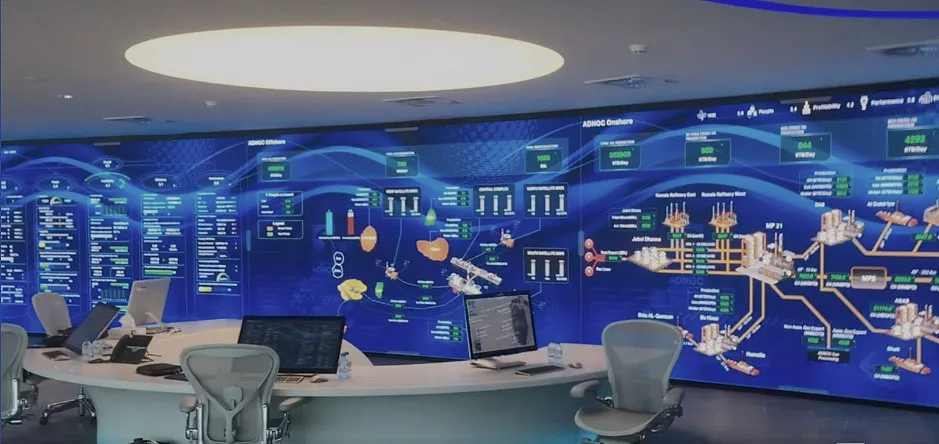
The theory is understood, but how do you manage to comply with each of them, without forgetting any along the way, and thus guarantee optimal service? With UOCs.
The unified operations centers (UOC) allow the monitoring and joint operation of infrastructures in real time, as well as the development and exploitation of key indicators (KPIs) that facilitate the monitoring and improvement of activities and operations.
And that’s not all: this technology covers, beyond building management systems (BMS), the integration of services/facilities with the hospital area. A clear example of this is the management of room availability, which is achieved by unifying and sharing information between the different actors: cleaning, orderlies, medical personnel, ambulances, assistants, nursing, etc.
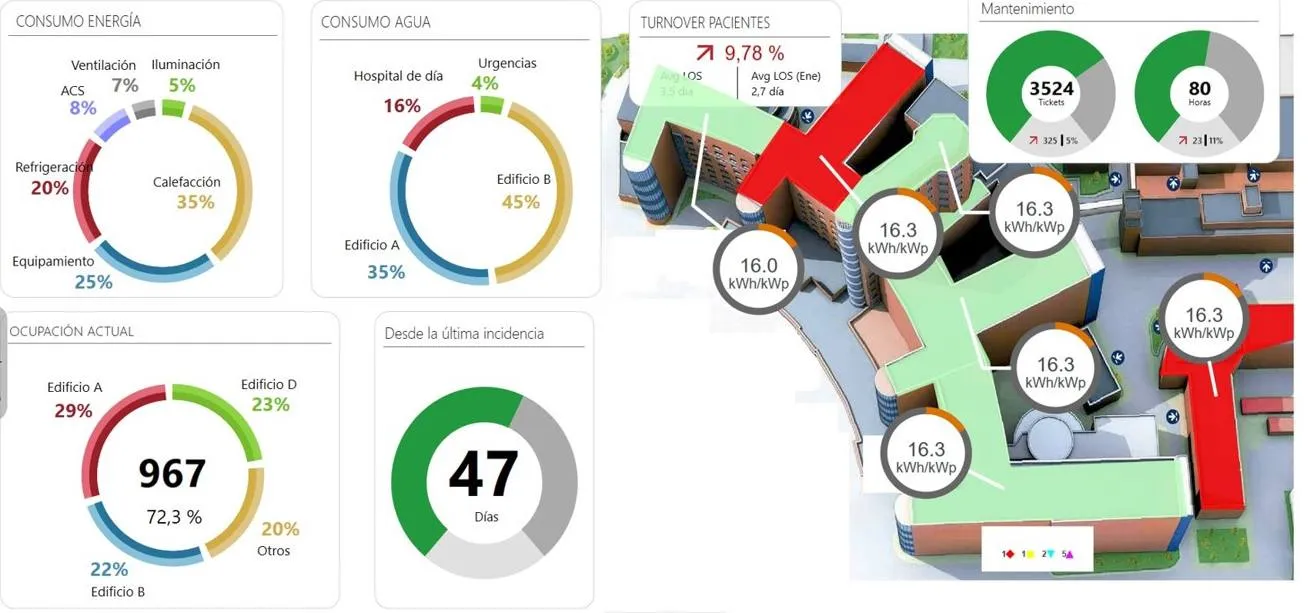
Thus, by applying unified management in hospitals, you obtain complete visibility of what happens in the buildings, in addition to increasing performance, reducing costs, and minimizing possible failures.
With an experience of more than 40 years, at Becolve Digital we are at your disposal to offer you solutions aligned with your short- and long-term BMS objectives, and help you reach the following levels.