


Solutions
RTU Communication
Control your most hostile, remote, and unattended environments
Control your most hostile, remote, and unattended environments
Water and energy are two interdependent resources that are fundamental for sustainable development, but they are sometimes handled in critical circumstances that complicate their preservation. There are countless unfavorable scenarios that can alter the performance of both. Unattended facilities, difficult-to-access environments, or adverse environmental conditions are some examples.
RTUs (Remote Terminal Units) are devices for the remote control of facilities, in particular, isolated facilities that require enhanced management. In addition to coordinating physical equipment, they communicate with the company’s SCADA system and lead to much more efficient supervision.
Advantages of Incorporating RTUs into your Infrastructure
- Robustness: RTUs have been tested with strict tests that guarantee their high tolerance to altitude, temperature, and humidity, making them infallible in the face of any weather situation.
- Accessibility: thanks to a series of VPN protocols, a simple and completely secure data collection and distribution network can be generated to know what is happening in the infrastructure at all times.
- High-level security: this data communication between the remote (RTU) and external sources is encrypted through certificates and over secure layers, such as SSL or TLS, which never lower their guard, even in the most exposed environments.
- Redundancy: the non-stop operation of the infrastructure is another guarantee of RTUs, and it is achieved with the redundancy they offer both in the CPU power supply and in the entire network in general. Again, it does not matter how critical the scenario is.
- Multiprotocol: they are capable of communicating more than 40 protocols: industrial, IIoT, Smart Grids such as Modbus (master/slave, RTU/TCP/ASCII), DNP 3.0, IEC 60870-5- 101/104, IEC61850, GOOSE, OPC UA, MQTT(S), Siemens ISO-on-TCP, Allen Bradley DF1 or Ethernet/IP.
- Modularity: in line with the above, they can also be executed with different modules, such as inputs and outputs, fiber optic communication, Ethernet, Wifi, Serial, 2G, 3G, and 4G.
- Versatile energy consumption: remote units are prepared to work with a wide range of voltages (80-265 VAC, 8-60 VDC). Likewise, they take advantage of solar energy and other alternative resources in environments without a power supply. Some are even powered only by battery.
Remote Control, one of the Strengths of Remote Units
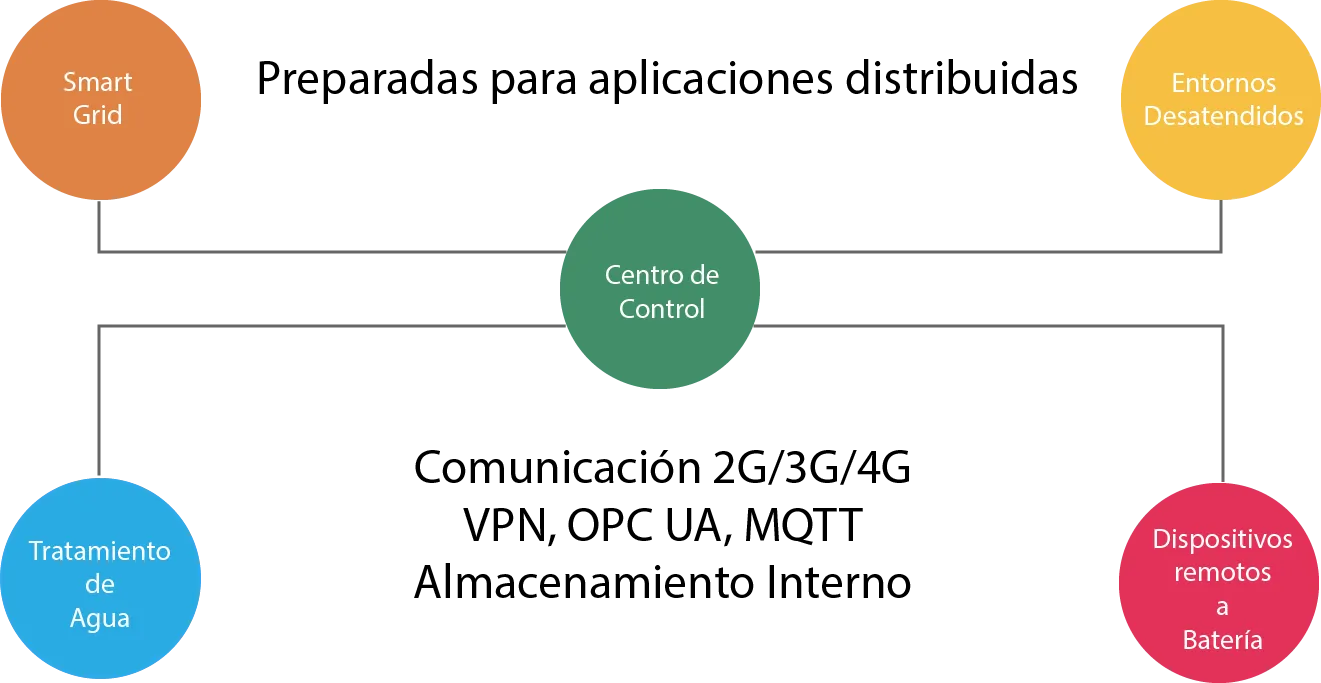
Beyond the aforementioned, one of the most notable characteristics of remote units is their ability to offer remote control. Unlike PLCs, RTUs come prepared to provide access to a distributed network, such as a VPN. The presence of this type of software, together with its wide variety of communication possibilities (Ethernet, Fiber Optic, or 2G/3G/4G mobile communication), makes them the best option for difficult-to-access infrastructures.
Approach to Unattended Environments
Likewise, both robustness and accessibility make them ideal for those places where there are no operators, or where they are not qualified to configure the control units. From a web interface, RTUs allow you to monitor the status of the infrastructure and generate dashboards and reports in real time.
Store and Forward, Differentiating Aspect
As if that were not enough, remote units are designed to continue working even if they lose connection to the central system. Their technique of Store and Forward allows them to have the necessary functionalities so that the data they collect is stored automatically, retained in an intermediate node, and, once connectivity is restored, forwarded to its final destination.
Where to use remote units?
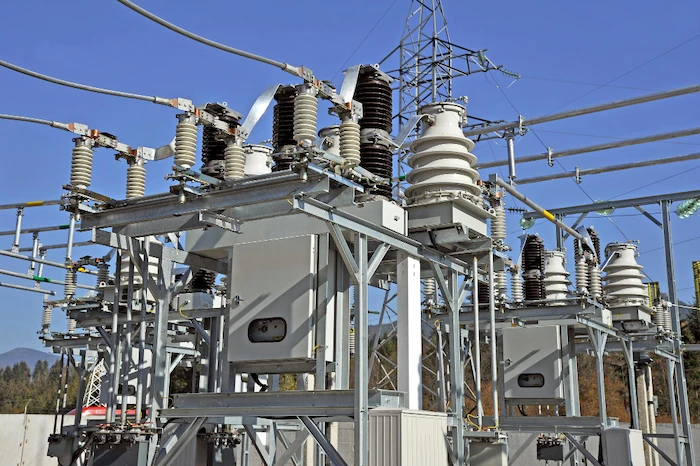
From real-time monitoring to demand management and event response, our RTUs provide you with the necessary control to have an efficient Smart Grid, as they have protocols such as IEC61850, GOOSE, and IEC 61870.

You will also find them in infrastructures such as oil well control stations in the desert or environmental monitoring in remote places, where access by any operator or an external power supply is impossible.
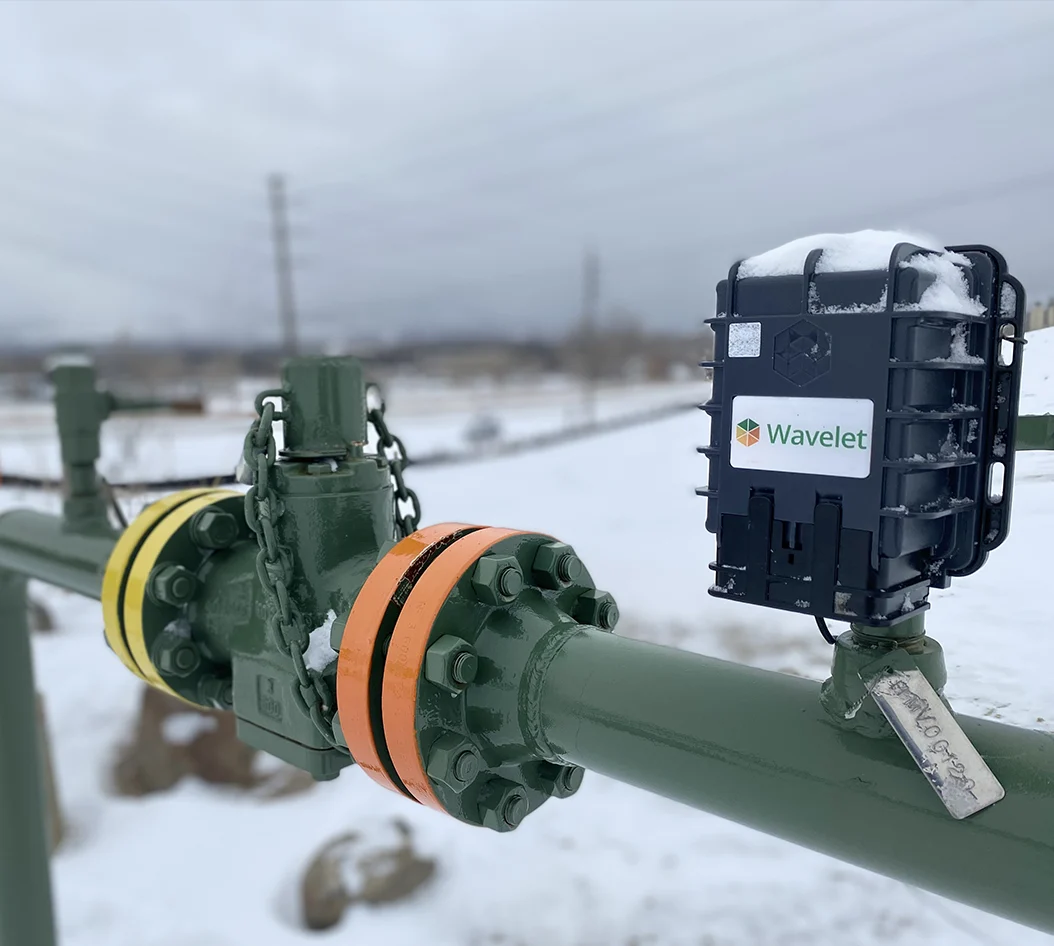
And why do they continue to work even so? Because they have robust IP68 protection housings, ideal for facing adverse conditions, and internal batteries as a solution to the possible lack of electrical grid.
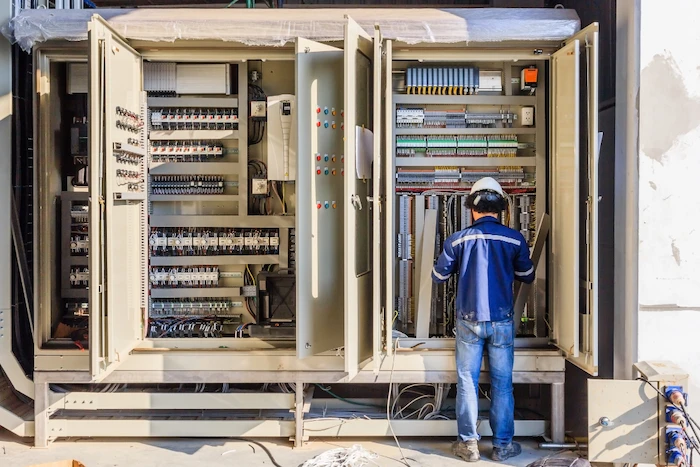
In short, remote units can fit into a multitude of scenarios where robustness and accessibility are essential, such as data centers or electrical panels in ports, airports, and tunnels.
Related products:

Contact an Expert
Fill in your information and we’ll contact you.
"*" indicates required fields