Keynote by Kent Larson – Design and Technology for High-Density, Livable Cities.
Principal Investigator and Director of Changing Places Group – MIT Media Lab – Department of Architecture and Media Lab – Cambridge – USA. The 2013 Smart City Expo kicks off wi...


Principal Investigator and Director of Changing Places Group – MIT Media Lab – Department of Architecture and Media Lab – Cambridge – USA.

The 2013 Smart City Expo kicks off with this Keynote by Ken, in which he reviews the technologies and models being developed by MIT in conjunction with various companies and start-ups. His proposal focuses on five main blocks.
- City of micro-cities
- Mobility on demand.
- Living space on demand.
- Workspace on demand.
- Urban food on demand.
- Nervous system of the city.
1. City of micro-cities
We propose the analysis and search for solutions to the challenges of the city based on a fragmentation of it, referring to the micro-cities within the city. These could be areas of traditional neighborhoods or new constructions. He cites successful examples such as those of Paris or Barcelona where these micro-neighborhoods offer good habitability ratios and facilitate access to numerous services for their inhabitants in less than 20 minutes.
Planning at these small scales can allow the design of efficient transportation systems between neighborhoods and the deployment of shared mobility systems within them.
At MIT, we use physical models of cities designed with Lego pieces that allow them to “play” with their models, project information to generate data layers, and experiment with different uses.
We have examples such as a recent simulation they have carried out in Valencia along the old Turia riverbed; the mapping has made it possible to identify the different experiences and uses of this axis that connects the city from west to east.
2. Mobility on demand.
At the moment, we are moving away from the image of the American dream ideal, housing, with two vehicles; in fact, The Economist speaks of Share Economy. The new shared economy, where young people in the city share spaces to live, to work, to get around.
From MIT, we are developing CityCar, a foldable electric vehicle that facilitates personal mobility and its shared use in the city. Its version 2.0 has recently been presented to the European Commission for the development of pilot experiences in different countries.
The success of the electric vehicle lies in combining its autonomy with its versatility for comparison and the electrification of the city. We can reduce x5 the space occupied by traditional vehicles and considerably reduce death from accidents.
3. Living space on demand.
Mayors of Boston and NYC are promoting micro-units to be able to live in cities, but young people do not like the experiences that are being developed. From MIT, we are working on the CityHome that allows these apartments to be transformed and adapted to the needs of their inhabitants. These are very simple strategies for very small apartments with multiple habitability options, with modular walls that can be moved, with very sophisticated sensor and mobility systems. We are carrying out pilot experiences with young people and the results are being very interesting with
4. Workspace on demand.
We return to the Share economy; new forms of work are emerging in the city, such as in a Starbucks, in airport lounges; there are many facilities in the city that are being used as mobile offices.
From MIT, we have worked with the Media Labs, designing modular workspaces according to their needs, with different possibilities of privacy, use of space, and much more efficient.
5. Urban food on demand.
The scarcity of resources, the lack of water, and the difficulties for access to food for a large part of the population force us to rethink the modes of production, supply and marketing chains, as well as food security.
The future does not lie in micro-plantations or mega-agricultural exploitations. From MIT, we have developed microponic experiences – CityFarm – in the laboratory with less water use, with fewer fertilizers. CityFarm.
We are developing experiences on building facades in cities with which we can increase agricultural surface production, reducing water use and the use of fertilizers
6. Nervous system of the city.
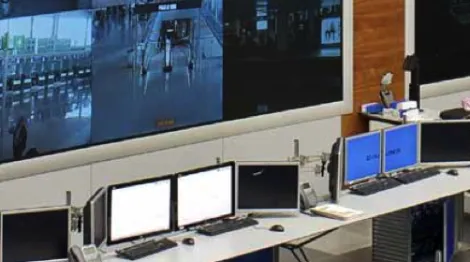
Sensors and algorithms respond in real time; we can draw a parallel with the human body. The future involves a nervous system of cities in which we are able to respond to stimuli in real time.
We have systems such as City-Lighting, for example, which allows streetlights to be switched on as the citizen approaches them.
“This example is what we are developing from Logitek – Wonderware Spain with its initiative www.creatingsmartcities.es, its technological solution can function as the brain-platform of the city that manages the information of the peripheral nervous system and its network of sensors”
Big Data is a challenge to analyze what to do with all this information in real time. Another example that we are working on from MIT is a dynamic lighting system with activity sensors, where we use algorithms to identify the activities that are being carried out, thereby maximizing energy savings based on the uses that are detected, for example, in a room or an office. This adjustment requires experimenting and seeing the acceptance of the inhabitants of the homes; it is necessary to develop a system for universal use, not only for young people who are more receptive.
An example could be to place an articulated mirror on the facade that allows adapting the light needs in the home. We can achieve 35% energy savings but only with real-time activity recognition. However, we must have persuasion strategies that allow us to change the areas and make efficient use of all these advances
But how can we deploy these technologies on a larger scale?
From MIT, we are working on the CityScope initiative, which includes these three systems:
- Implementation of a real-time data observatory/platform.
- An urban intervention simulator.
- A decision support system.
We have developed this model in our laboratory, and Ken uses a photograph from the Avatar movie laboratory as an example.
CityScope is being worked on from MIT using physical models of the city with Lego pieces; we are simulating the dynamics of winds, the mobility of vehicles.
We have developed simulations of projections with different models, and we can develop comparisons between plan A and plan B on issues such as traffic.
In this Lego city, we project the information and it allows us to work with those responsible for the city, for the companies. We scan this model and it allows us to analyze the networks and communications, such as, for example, the nocturnal behavior of the city of San Francisco. We can analyze the behavior according to age profiles: families move to restaurants, and young people to nightlife areas…
At MIT, we are simulating the impact of all these systems and models and seeing the different effects and fostering creativity. Working with physical models allows us to project information and understand its dynamics. This type of model has multiple applications: traffic, education, health, flow of goods, wind flows, personal data, payment data, food networks, habitability, productivity. However, we must have an open data platform that allows interaction with the inhabitants. Barcelona can be a good example to organize a partnership and experiment with these models.
In conclusion
We must be able to realize that cities should be made for people, and these must be at the center of Smart Cities; they must be more habitable; Smart strategies must have this vision of the future to be more efficient.