OPS Technology for the Ports of the Future
More and more ports are using it as a shock measure against emissions, something that awakens the need to incorporate control systems for all its actors. We'll tell you about it.


Reducing the carbon footprint is an objective that already leads many lists in industries and infrastructures around the world, and ports are no exception. Both governments and environmental organizations are promoting the reduction of emissions and the improvement of air quality in port areas, with initiatives such as the implementation of OPS (Onshore Power Supply) technology.
Also known as cold ironing, this technology uses a connection equipment and a power cable that connects from the ship to the electrical supply infrastructure in the port. Thus, ships can use electricity from the port instead of generating their own power through their diesel engines.
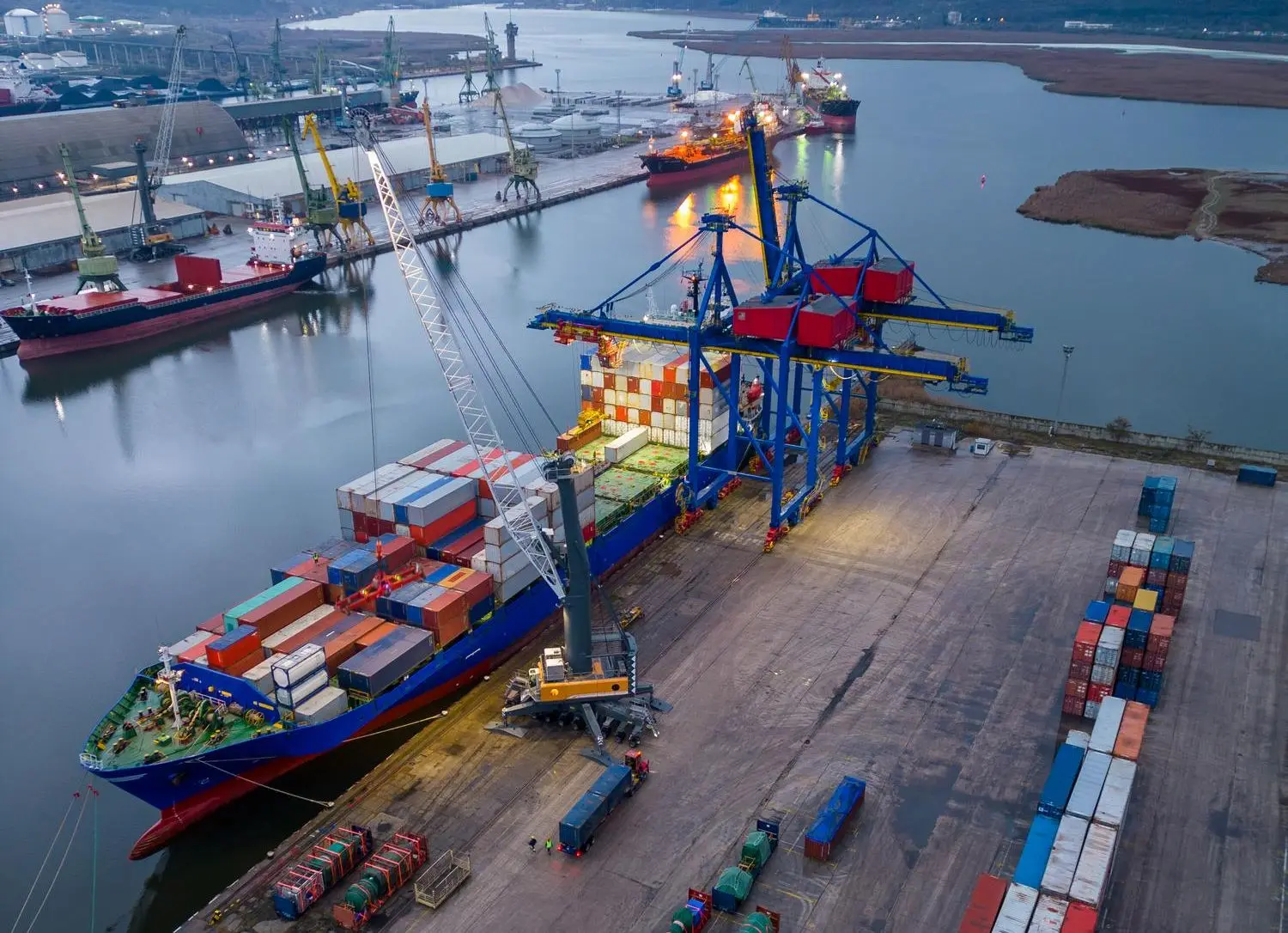
The significant benefits for the environment (with the reduction of greenhouse gases, vibrations and noise) and public health are increasing the presence of OPS technology in ports around the world. Benefits, in addition, that expand to other areas: for example, by using electricity instead of diesel, operating costs are significantly reduced.
Starting with the Beginning: What Do You Need to Implement this Technology?
Every project needs proper planning to get underway with the expected results, and the same is true in the case of adopting OPS technology in ports.
To carry out a successful implementation, it is first necessary to choose a SCADA monitoring and control system capable of monitoring and controlling the connection points, as well as the sources that will generate green energy: mobile floating platforms that treat hydrogen, wind and solar farms.
Therefore, the selected platform must be open, scalable, and modular.
AVEVA System Platform, Versatility and Robustness in the Form of a Solution
AVEVA System Platform is an adaptable and scalable solution for monitoring, HMI, SCADA and IIot applications, also very suitable in ports. Based on standards, it promotes collaboration and communication between the different actors for a continuous improvement of operations and real-time decision making.
Its infrastructure contextualizes processes, alarms, real-time events, and historical archive data through different business systems. With this, a common information model is generated that improves the efficiency, flexibility, and security of the system design and maintenance.
The software is independent of the hardware where it is installed. The software architecture of the servers varies depending on the criticality of the system, and robust servers can be installed at each of the OPS points to guarantee high availability. In some cases, it is recommended to implement a communications network independent of the port’s multi-service network.
Journey to a Smart Port
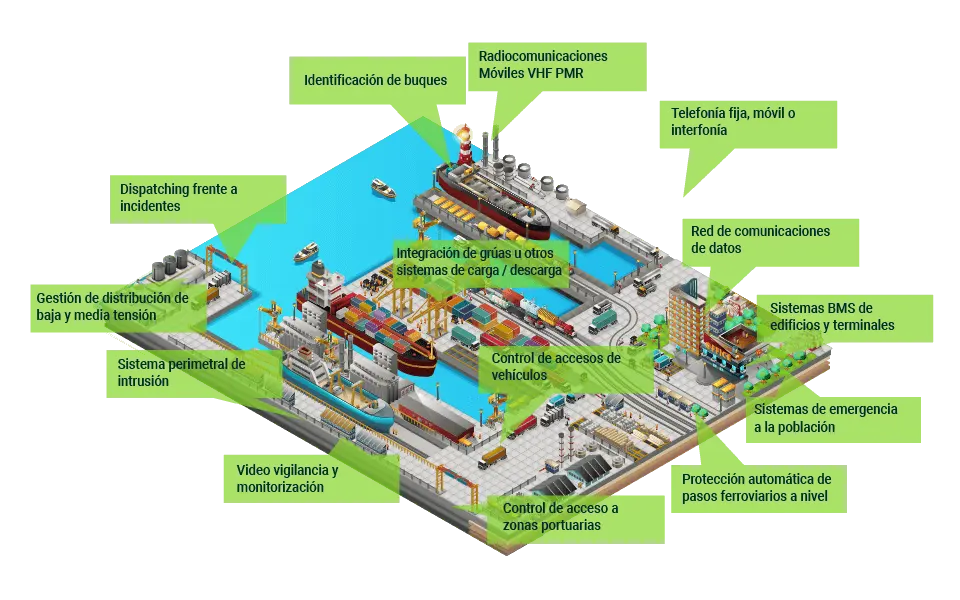
The mooring of System Platform in a port environment paves the way for the latter to become a benchmark Smart Port. Because beyond the supervision of energy systems operating with OPS technology, it can also assume the management of many others:
BMS (building management system), tunnels, lighthouses, movement of goods, traffic management, sanitation networks, information and communication systems and sensors, PSIM (physical security information management) systems, etc.
Beyond the platform itself, the Smart Port must have an operations control center, which integrates all the systems that form it and that allows managing and monitoring the status of the port from a single site.
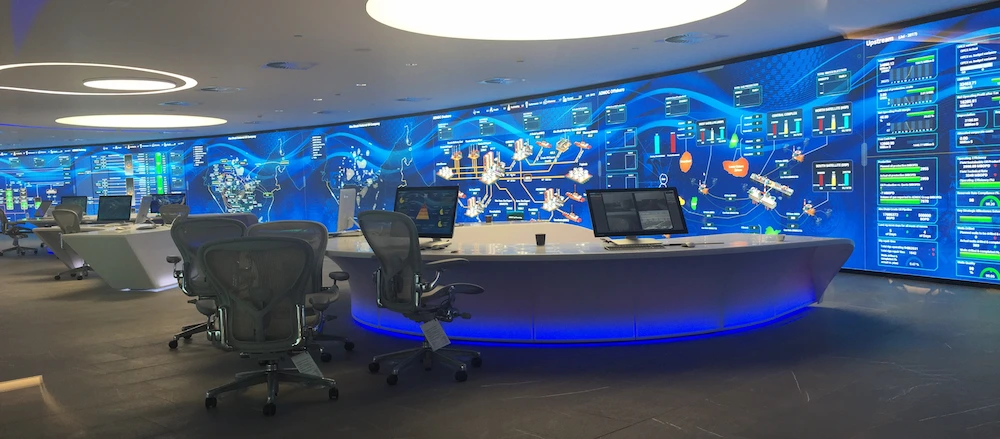
It is clear that smart ports are the increasingly near future, and that the issue does not end in adopting OPS technologies: it is necessary to know how to manage them and take advantage of the rest of the advanced alternatives. And, in addition to improving efficiency and safety in the port, the transition to a Smart Port positively impacts the competitiveness of the maritime industry and sustainable development.