Seven Key Technologies for the Success of a Centralized Online Management System in Water Management Applications
The preamble to Directive 2000/60/EC of the European Parliament and of the Council states that: “(1) Water is not a commercial commodity like any other but a heritage which must be protected, de...


The preamble to Directive 2000/60/EC of the European Parliament and of the Council states that:
“(1) Water is not a commercial commodity like any other but a heritage which must be protected, defended and treated as such.”
Projects in the water sector are typically long-term undertakings, presenting risks in investment recovery and regulatory constraints. A centralized online management system helps companies optimize asset utilization by reducing operating and energy costs, and facilitates agencies and regulators in collecting the information needed to meet inspection and control objectives for water and sewerage services.
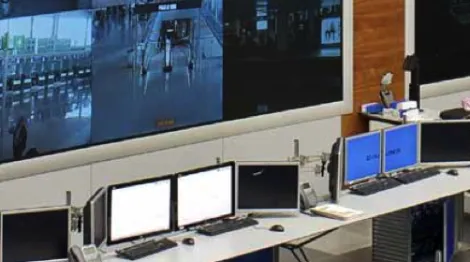
The centralized management system is the tool that allows agencies to have information on all managed facilities, reliable information (without manual intervention and validated), secure (no data loss, no possibility of manipulation), in a simple and economically sustainable manner and over time.
State-of-the-art information and communication technologies enable data to be collected directly from sensors and measuring instruments in the facilities and provide the data (inflow and outflow rates, turbidity, conductivity, etc.) automatically to a SCADA system for further exploitation.
Centralized management of information received from facilities offers many advantages, including:
- Reducing energy consumption and emissions through the implementation of savings policies and strategies.
- Production control through information on inflow and outflow rates, as well as waste production.
- Alignment with regulations regarding the quality parameters of wastewater discharged into the system.
- Reducing downtime and related costs by providing real-time information on faults, so that we can react quickly.
- Increasing the efficiency of preventive maintenance operations, including by anticipating equipment failure.
The existence of a centralized management system will allow us telecontrol facilities from any point, even through mobile workers, clearly reducing operating costs and reaction times.
A recent study by the Smart Networks Forum to examine the value perceived by users of online monitoring systems in utility companies indicated how important adequate online information management is for these companies to gain visibility and knowledge of their operations.
One of the key points in designing a centralized online management system is the selection of appropriate control and telecommunications technologies and architectures and the development of a master plan with clear and measurable objectives. These technologies include the following areas:
- Selection of equipment for control and data acquisition.
- Analyzing alternatives for telecommunications.
- Selecting a SCADA platform that meets our requirements.
This is, from a technology point of view, a centralized online management system, which considers a series of levels that SWAN (Smart Water Forum Networks) defines as follows:

In future posts, we will discuss levels 3, 4 and 5, which address the following seven key technologies: (1) Advanced control and communications equipment; (2) Mobile and remote operations; (3) Telecontrol protocols; (4) SCADA platform; (5) Historization and automatic reporting; (6) High availability architectures and configurations; and (7) Cybersecurity.